AI Business · · 5 min read
Can NVIDIA Still Be the 'Central Bank of AI' after Jensen Huang's Exit?
Understand how NVIDIA's leadership change could reshape AI financing and what that means for your business's AI infrastructure needs.
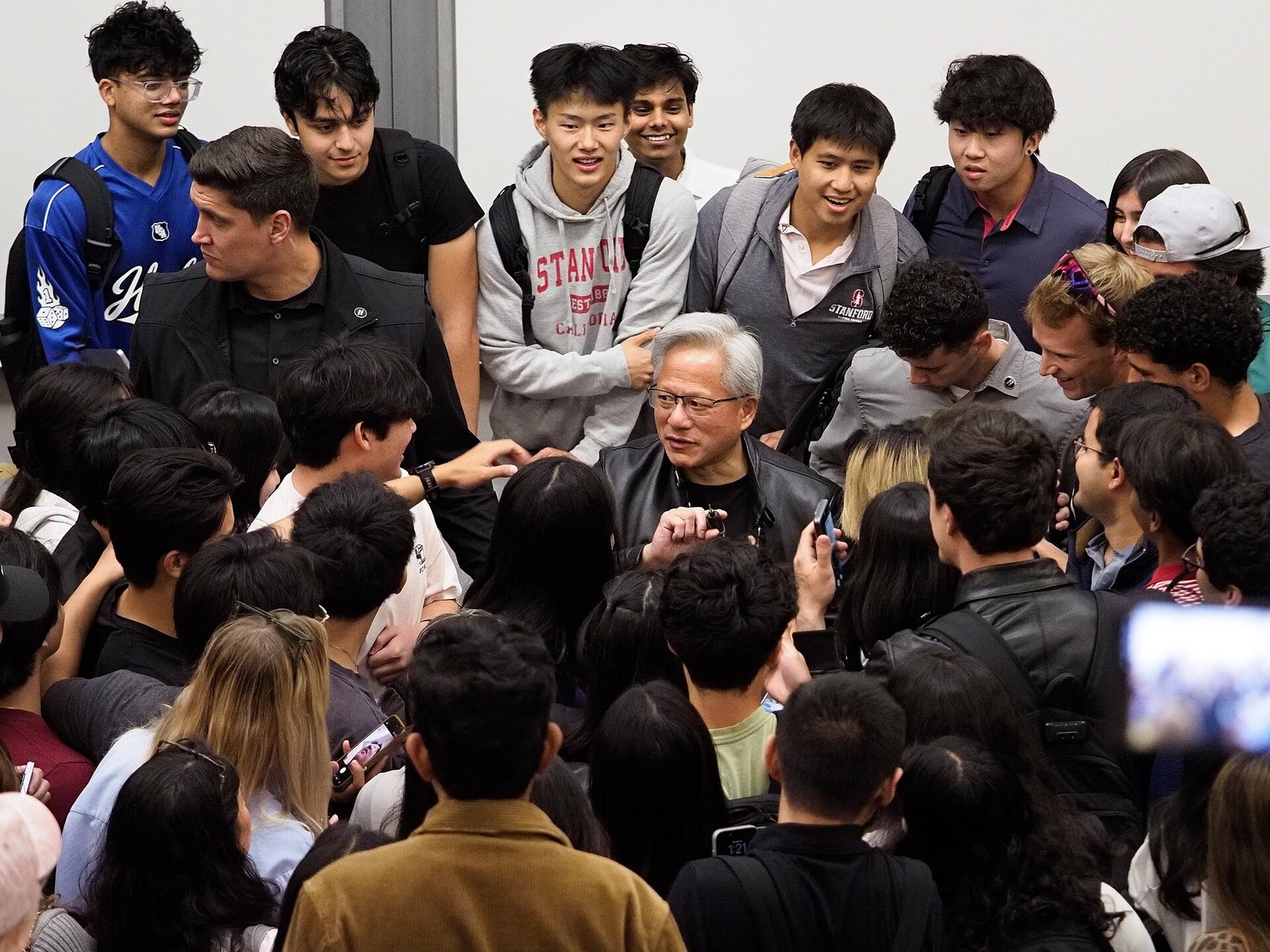
For years, NVIDIA has been more than just a chipmaker; it has been likened to the 'central bank of the AI trade'. This isn't just a catchy phrase. It points to a crucial role NVIDIA played in helping finance the immense computing capacity needed for the artificial intelligence boom.
But a recent leadership change has thrown a spotlight on this financial lifeline. Jensen Huang, the co-founder and CEO, has departed, with Colette Kress stepping in as interim CEO.
Business Today reported that Kress had previously questioned Huang's strategy of offering billions of dollars in financial guarantees to AI infrastructure companies. These were firms that needed help affording NVIDIA's expensive chips and data centre solutions.
The disagreement, according to The Wall Street Journal, was about how NVIDIA should evaluate these large financial commitments.
This isn't just about internal boardroom dynamics at a tech giant. For businesses across every sector, from manufacturing and retail to healthcare and logistics, the real question is how this shift at NVIDIA will impact the availability and cost of the AI infrastructure they increasingly rely on.
Will the 'central bank' tighten its purse strings? And if so, what happens to the companies building the AI products you use?
That raises three questions.
Question 1
What Was NVIDIA's AI Financing Strategy before Jensen Huang's Departure?
Before Jensen Huang's departure, NVIDIA had adopted an aggressive strategy to fuel demand for its high-cost AI chips. The company was reportedly considering billions of dollars in financial guarantees for cloud providers and data centre developers.
These were companies that, despite needing NVIDIA's powerful Graphics Processing Units (GPUs) for AI, often couldn't afford them outright. According to Business Today, some of these arrangements were even led by Huang's son-in-law, Nico Caprez, aiming to turn emerging players into long-term customers.
For context, NVIDIA's chips are not cheap. A single high-end AI GPU can cost tens of thousands of dollars. By offering financial support, NVIDIA ensured that its hardware became the backbone of new AI infrastructure, securing future business and fending off competitors.
This strategy wasn't just about selling chips; it was about cultivating an ecosystem. Think of it like a mobile phone shop offering credit to customers to buy expensive smartphones. The shop ensures customers can afford the phone, but in return, they commit to that brand for future upgrades, accessories, and repairs, creating a loyal, long-term customer base. This is how NVIDIA helped drive the rapid expansion of AI computing capacity across the industry.
Question 2
How Might NVIDIA's AI Financing Approach Change Under Colette Kress?
The shift under interim CEO Colette Kress suggests a move towards greater financial scrutiny. Business Today reported that Kress had questioned Huang's approach, particularly how NVIDIA should evaluate these guarantees, select recipient companies, and calculate potential returns.
During an August meeting, Huang reportedly criticised Kress for her cautious stance, describing her as a "reporting CFO" rather than a strategic one. However, Kress's concerns were grounded in real financial risks, as these arrangements exposed NVIDIA to significant commitments.
Well, Kress has already made an impact. She helped cut NVIDIA's proposed financial commitment to an OpenAI data centre project by half, with the smaller agreement signed in August. NVIDIA has also paused some financing deals, informing customers that such arrangements would now face greater executive and board scrutiny.
This means a transition from a growth-at-all-costs financing model to one that is more measured and risk-aware. Imagine a toll plaza where heavy commercial vehicles previously received credit on their bulk passes, but now, under new management, every fleet owner faces stricter credit checks or needs to pay more upfront. This makes the financial flow more predictable for the toll operator but could mean higher immediate costs or slower passage for some vehicle owners. Kress herself publicly defended the investments, stating that returns on invested capital would be excellent, but she clearly wants the process to be more rigorous.
And that brings us to the second question.
Question 3
What Does NVIDIA's Leadership Change Mean for Businesses Building AI?
For businesses relying on AI, NVIDIA's leadership change could have tangible effects, particularly for those using smaller or emerging AI cloud providers. Moneycontrol highlighted the immediate question for companies building AI products: can NVIDIA keep delivering the chips and technology their investments depend on?
Ed Yardeni, President of Yardeni Research, acknowledged that Huang's departure raises concerns about AI financing risks. While his base case is that NVIDIA's financing strategy will remain intact, he noted that Huang was a highly influential advocate and "cheerleader" for AI companies.
His absence might leave a void in rallying support and defending the financial health of AI infrastructure firms, as he publicly did for CoreWeave in October. Yardeni also pointed out that NVIDIA bought over $42 billion in equity securities during the first half of its current fiscal year, a huge jump from around $1.2 billion a year earlier. This shows the sheer scale of NVIDIA's financial involvement.
So, what does this mean for you? If you're a business leader, it's time to ask: Are your AI cloud providers heavily reliant on NVIDIA's direct financing? How diversified are their funding sources? A tightening of NVIDIA's financing tap could lead to higher costs or slower expansion for some niche AI cloud providers.
While Yardeni believes the overall AI investment boom will continue, the path might become less smooth for those at the bleeding edge, especially smaller players who previously benefited from NVIDIA's more expansive financial support. It's a signal to assess the financial resilience of your AI supply chain.
The Bigger Picture
The story of NVIDIA's leadership transition isn't just about corporate politics; it's a window into the financial bedrock of the entire AI industry. For years, NVIDIA's dual role as a leading chip manufacturer and a significant financier has accelerated AI adoption, acting as a powerful engine for innovation.
As Colette Kress steers the company, the 'central bank of AI' might become more selective, more rigorous, and perhaps, more sustainable in its investments. This shift will inevitably ripple through the ecosystem, demanding greater transparency and financial prudence from AI infrastructure providers.
For business leaders, this means moving beyond simply understanding the technological capabilities of AI. It requires a deeper dive into the financial plumbing that supports those capabilities. Ensuring your AI partners have robust, diversified funding is becoming as critical as their technical prowess.
In the world of AI, the flow of capital is as crucial as the flow of data.
Quick Answers
What was NVIDIA's AI financing strategy?
NVIDIA offered billions in financial guarantees to cloud providers and data centre developers to help them afford its expensive AI chips. This strategy secured customers and drove demand for its hardware, effectively making NVIDIA a key financier in the AI ecosystem.
How might NVIDIA's AI financing change under Colette Kress?
Under Colette Kress, NVIDIA's financing approach is expected to become more scrutinised and risk-aware. She has already reduced commitments and paused some deals, indicating a shift from an aggressive growth-driven model to one focused on more rigorous evaluation and selection of recipients.
What does this mean for businesses using AI?
Businesses using AI should assess the financial stability of their AI cloud providers, especially smaller ones, as tighter financing from NVIDIA could lead to higher costs or slower expansion for these providers. Understanding your AI supply chain's funding sources is now more critical.
Sources
- Business Today13 Nov · 08:44 IST
- Moneycontrol13 Nov · 09:31 IST
- Asianet Newsable13 Nov · 10:10 IST
Facts are credited to the outlets above. The analysis, calculations and Signal Check are by the Finnect AI Insights desk.