AI Business · · 5 min read
Why Did SoftBank Just Value Agile Robots at $8.5 Billion?
You will understand why investors are pricing industrial hardware companies like high-margin software platforms, and what physical AI means for the future of factory automation.
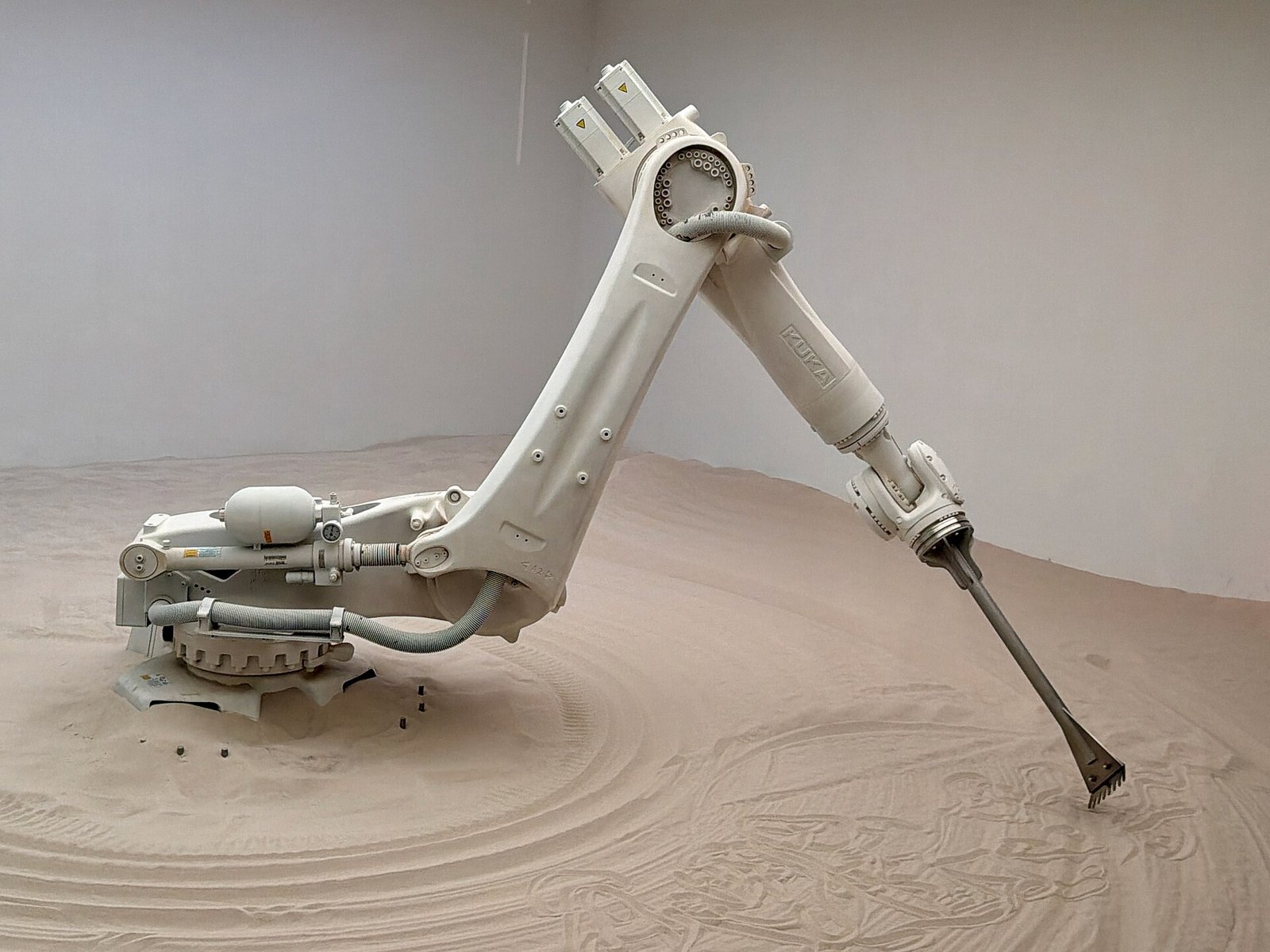
A robotics start-up in Munich just pulled off one of the most striking funding rounds of the year. Agile Robots, founded in 2018, has secured $500 million in fresh capital. The round was led by the Japanese technology investment giant SoftBank, with heavy-hitting participation from AI chip behemoth Nvidia and the Japanese industrial group Hitachi.
The new funding values the six-year-old company at a staggering $8.5 billion, or roughly 7.7 billion euros. According to a company spokesman speaking to Agence France-Presse, this fresh capital injection officially makes Agile Robots the most valuable physical AI robotics firm in Europe.
The company is already one of Europe's leading makers of humanoid robots and robotic arms. Their equipment is specifically designed to automate and significantly speed up factory work. To date, Agile Robots says it has deployed around 20,000 robots across major global industries, including automotive manufacturing, consumer electronics, and logistics.
It sounds like a standard technology funding announcement on the surface. But look closely at the math behind that massive valuation. At $8.5 billion, investors are effectively pricing the company at $425,000 for every single robot it has deployed so far.
That is simply not how financial markets value sheet metal, electric motors, and hydraulic pumps. Investors are looking at a factory equipment company and pricing it exactly like a high-margin software platform. That raises three questions.
Question 1
Why is a Robotics Start-up Commanding a Software-level Valuation?
The presence of Nvidia and SoftBank on the cap table tells you everything you need to know about this deal. These are not traditional industrial investors looking for incremental improvements in assembly line speed. Hitachi brings deep expertise in heavy industrial processes, while Nvidia provides the crucial silicon brains required to process massive amounts of physical data in real time. They are betting on a fundamental shift in how machines operate. Agile Robots builds physical robotic arms and humanoid robots, but the metal shell is entirely secondary to the intelligence inside it.
For context, traditional factory robots are essentially programmable, blind machines. They perform one specific movement repeatedly and without any variation. If a part on the assembly line is slightly misaligned, a traditional robot cannot adapt. The value of that traditional machine is purely in its physical durability, which naturally depreciates over time.
Physical AI turns that traditional business model completely upside down. For the uninitiated, physical AI refers to machines that use artificial intelligence to perceive their physical environment and adapt their actions accordingly. The software running the robot becomes more capable and valuable as it collects data and learns from its surroundings. Investors are paying an $8.5 billion premium because they believe the software platform will scale infinitely, long after the initial hardware is bolted to the floor.
Question 2
How Does Physical AI Actually Change the Factory Floor?
Agile Robots CEO and founder Zhaopeng Chen noted that their ultimate vision is intelligent robots working alongside people in factories and warehouses everywhere. This is a massive departure from traditional industrial automation. Historically, factory robots have been kept isolated behind heavy steel cages to protect human workers from their rigid, swinging arms.
Think of a modern toll plaza equipped with FASTag scanners. The physical boom barrier is just cheap, basic hardware. The real magic, and the real value, is the software system instantly reading tags, deducting balances, and deciding exactly when to lift the gate. Physical AI on the factory floor works the exact same way. The robotic arm is just the boom barrier. The true product is the AI brain making split-second decisions about how to grip an unfamiliar object or safely avoid a human worker.
This intelligence fundamentally changes the economics of industrial automation. When the machine can adapt to its environment, you do not need to re-engineer your entire production line to accommodate the robot. The robot accommodates the production line. Agile Robots is capitalising on this flexibility, successfully rolling out 20,000 machines across highly variable and complex environments like logistics warehouses and consumer electronics plants. And that brings us to the third question.
Question 3
What Does This Influx of Capital Mean for Manufacturers?
The $500 million cash injection gives Agile Robots the financial firepower to expand globally. Chen stated that the funding will be used to support expansion into the United States and facilitate entry into entirely new markets. More importantly, the company is rapidly ramping up its production capacity right at home in Germany to meet surging demand.
Earlier this year, the company opened a new factory outside Munich. They claim this single facility can produce up to 10,000 humanoid robots annually. Entering the United States puts Agile Robots directly in competition with well-funded American robotics firms, making this a high-stakes global land grab. For business leaders in manufacturing, this signals a rapid maturation of the physical AI supply chain. You can expect to see more vendors entering the market, more competitive financing options, and much faster pilot programmes for automation deployment.
This is also a crucial moment for European industry as a whole. Europe has largely lagged behind the United States and China in developing famous digital artificial intelligence models. However, the deployment of AI in traditional industrial processes is an area where some believe the continent could maintain a serious edge. Agile Robots is leading a crop of German start-ups trying to drag AI out of the digital realm and deploy it directly among the country's traditional manufacturers.
The Bigger Picture
The $8.5 billion valuation of Agile Robots is not just a milestone for one Munich start-up. It is a clear signal of where the broader automation market is heading next. The artificial intelligence that has transformed our screens is now coming for our supply chains.
For years, the biggest bottleneck in factory automation was the sheer cost of custom engineering for every new task. Now, as AI models learn to navigate the physical world seamlessly, that barrier is finally falling away.
The most valuable part of your next factory upgrade will not be made of steel. It will be made of code.
Quick Answers
What is Agile Robots' current valuation?
Agile Robots is currently valued at $8.5 billion following a $500 million funding round led by SoftBank.
What does Agile Robots do?
The Munich-based company develops physical AI, producing robotic arms and humanoid robots that automate tasks in the automotive, electronics, and logistics industries.
Who are the main competitors of Agile Robots?
Agile Robots faces fierce international competition from bigger Chinese robotics firms like Unitree, which benefit from substantial government support.
Sources
- Agence France-Presse12 Nov · 10:45 IST
Facts are credited to the outlets above. The analysis, calculations and Signal Check are by the Finnect AI Insights desk.