Funding & Deals · · 6 min read
Does Nvidia's Leadership Change Threaten the AI Industry's Hidden Funding?
We explain how chipmakers are propping up the AI industry with financial guarantees and what Nvidia's recent shake-up means for this complex funding model.
Imagine launching one of the biggest stock market listings in history, aiming for a valuation of up to $1.4 trillion. That's Anthropic, the maker of the Claude chatbot, as it prepares for its Nasdaq debut on November 19.
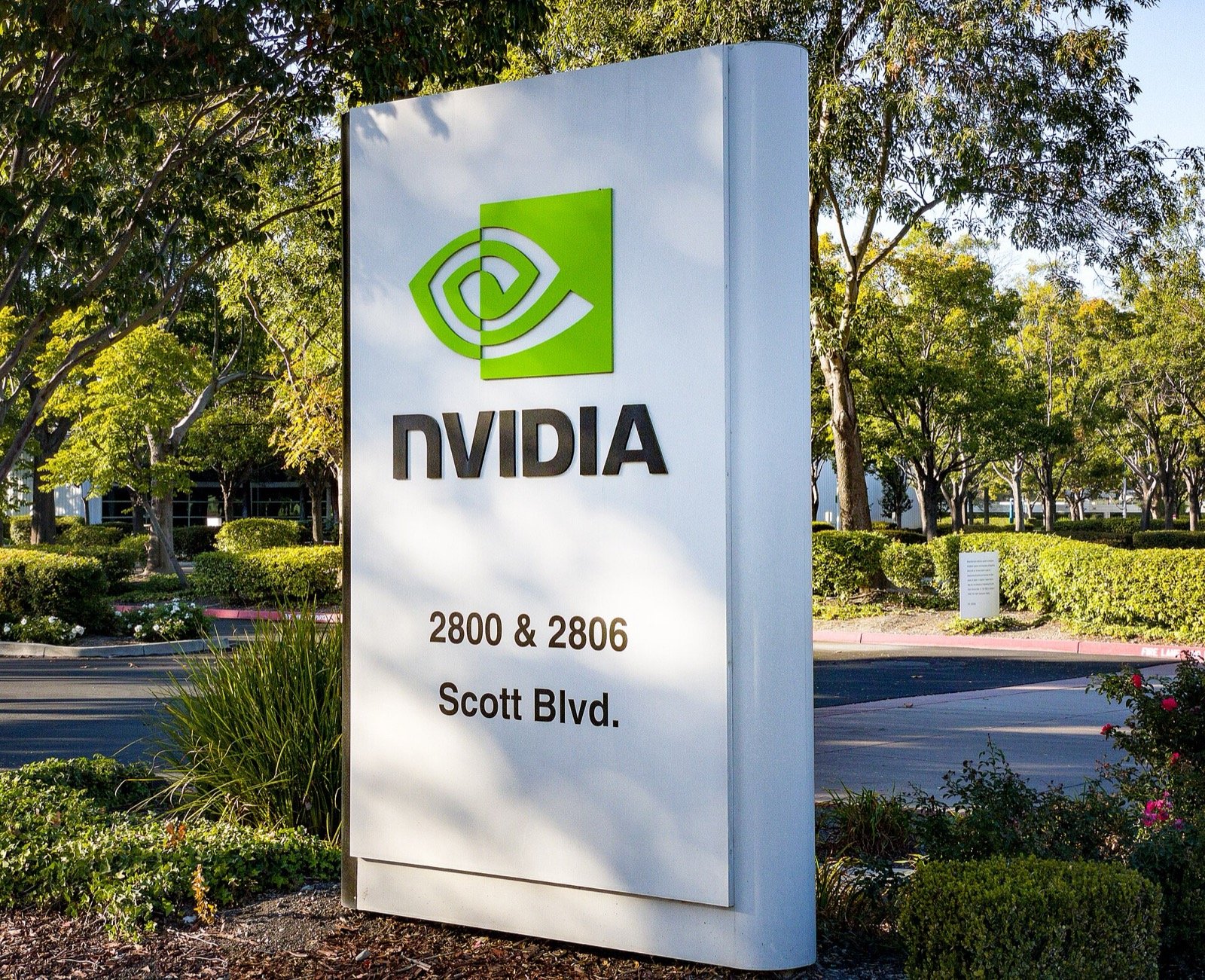
Part of this massive undertaking involves a $26 billion private placement, with tech giants like Google and Microsoft committing billions. Crucially, Nvidia, the powerhouse chipmaker, has pledged a significant $10 billion.
But just a week before Anthropic's shares are set to trade, a sudden development at Nvidia has cast a shadow. Its long-time CEO, Jensen Huang, resigned amidst allegations, putting that crucial $10 billion commitment under a harsh spotlight, as reported by Hindustan Times.
On the surface, this looks like a story about a high-stakes IPO and a corporate scandal. But that's not the interesting part. The real story lies deeper, in the intricate and often unseen financial threads connecting the chipmakers who build the hardware and the AI companies who use it.
This connection isn't just about sales; it's about how chipmakers are essentially underwriting the very growth of the AI industry. That raises three questions.
Question 1
What is Nvidia's $10 Billion Pledge to Anthropic, and Why is It Now Under Scrutiny?
Anthropic is offering 825 million shares at $70 to $78 each, aiming to raise up to $64.4 billion and a valuation of up to $1.4 trillion, according to Reuters. This makes it one of the largest listings on record, surpassing SpaceX's $75 billion listing in June.
Alongside this public offering, seven technology companies have agreed to buy $26 billion of shares privately. Nvidia and Google are each buying about $10 billion, AMD $2.5 billion, and Broadcom, Micron, and Microsoft about $1 billion each, with chipmaker TSMC taking $500 million.
Jensen Huang's unexpected resignation from Nvidia last Thursday, following reports of affairs, has drawn immediate attention to Nvidia's commitment. Bloomberg Intelligence analyst Mandeep Singh noted that a leadership transition could prompt Nvidia's board to reassess the size, timing, or strategic rationale of its pledge to Anthropic.
For context, Nvidia, under Huang, was often dubbed “the central bank of AI” for its strategy of taking stakes and guaranteeing deals across the industry to bolster confidence. This investment in Anthropic was seen as a key signal of support, crucial for its IPO pricing at around $1.4 trillion.
While the deal is expected to proceed, according to Matt Maley of Miller Tabak, any delay or reduction by Nvidia “could weaken an important signal of support for Anthropic’s IPO pricing.” The Financial Express highlights that this timing, just before Nvidia's quarterly results and Anthropic's debut, creates uncertainty and puts a spotlight on the broader model of chipmakers underpinning AI firms.
And that brings us to the core of how these relationships work, and the second question.
Question 2
How Do Chipmakers Like Nvidia and Broadcom Use Financial Guarantees to Fuel the AI Industry?
The AI industry needs massive computing power, meaning expensive processors. To get these chips, AI companies often lease them through complex financial deals.
Here's how it works: a specially created company borrows money to buy the chips and then leases them to an AI firm. If the AI firm can't make its payments, the chips are either re-leased to someone else or sold to repay the debt.
This is where chipmakers step in with “residual value support” (a guarantee). They promise to cover any shortfall if the chips don't recoup the debt. This guarantee makes lenders more confident, helps the debt get higher credit ratings, and ultimately lowers borrowing costs for AI companies, according to Bloomberg.
For context, Nvidia has typically offered to cover up to 25% of such a deal. However, rival Broadcom has gone much further. In May, it guaranteed $30 billion of a $35 billion debt deal for Anthropic to lease its own tensor processing units (TPUs), and it is backing about $43 billion of a second $63 billion deal that will also support Anthropic.
You see, Nvidia's relatively smaller 25% backstop has complicated its own efforts to finance $500 billion of AI computing deals. Bloomberg reported that some customers and Wall Street partners had pressed Nvidia to raise its guarantee, as holding at 25% could make its chips harder for customers to afford and its deals less attractive to lenders.
Think of it like this: a new cab driver needs a loan for a Rs 10 lakh electric car. The car manufacturer (chipmaker) offers to co-sign the loan, promising to pay back a small portion (say, Rs 2.5 lakh or 25%) if the driver defaults. Another manufacturer (Broadcom) comes along and says, 'I'll pay Rs 8 lakh or 80% if they default.' Which loan would a bank (lender) prefer to back? This mechanism shows chipmakers are deeply invested in ensuring their products are bought, even if it means taking on significant financial risk.
But what does this mean for the stability of the rapidly expanding AI industry, and for your business decisions? Let's explore that in our final question.
Question 3
What Does This Chipmaker-led Funding Model Mean for the Future Stability of AI Development?
Anthropic, despite its strong ties to Nvidia, has diversified its chip sourcing. Its filing shows it uses a “multi-chip compute architecture across AWS Trainium, Google TPUs, NVIDIA GPUs, and AMD GPUs.” This diversification is a smart move, helping it avoid over-reliance on a single supplier, as noted by InvestorPlace analyst Luke Lango.
However, the company's own S-1 filing also warns that relying on cloud providers and suppliers with “strategic and investment relationships” could give rise to conflicts of interest. This highlights a deeper tension: while chipmakers are enabling AI growth, their financial stakes could influence the market in subtle ways.
For context, the AI industry is incredibly capital-intensive. Anthropic itself has committed to spending close to $900 billion on AI infrastructure in the coming years. High valuations for AI companies are built on assumptions of massive future growth and continued access to cutting-edge, expensive hardware.
This model, where chipmakers act as financiers, creates a tightly interwoven ecosystem. The health of chipmakers directly impacts the funding available for AI development. If a major chipmaker faces financial strain or a leadership crisis, as Nvidia is, it could ripple through the funding pipelines for AI labs and data centres.
For your business, this means understanding that the pricing and availability of AI services might not solely reflect market demand or technological innovation. They could also reflect the underlying financial commitments and risks taken by hardware suppliers. It suggests that a vendor's ability to offer competitive AI solutions might be tied to their chipmaker relationships, or how much their hardware supplier is willing to guarantee.
As Craig Coben wrote for FT Alphaville, Anthropic's IPO is “too important to fail” not just for its investors, but also for the companies supplying it with chips, cloud services, and computing power. A failure could put pressure on their own valuations.
The Bigger Picture
The saga of Nvidia, Anthropic, and the intricate world of AI financing reveals a fundamental truth about the modern tech landscape. The lines between supplier, customer, and financier are blurring, creating a complex web of interdependence.
This 'central bank of AI' model, where hardware giants underwrite the growth of their software counterparts, is powerful but also introduces new vulnerabilities. A shift in one corner, like a leadership change at a key chipmaker, can send tremors across the entire ecosystem.
For business leaders, understanding these hidden financial linkages is as crucial as understanding the technology itself. The future of AI isn't just about innovation; it's about who pays for it, and what strings are attached.
Navigating this landscape requires a keen eye not just on product roadmaps, but on balance sheets too. The stability of your AI future might just depend on it.
Quick Answers
What is Nvidia's $10 billion pledge to Anthropic?
Nvidia has committed to buying approximately $10 billion worth of shares in Anthropic as part of a $26 billion private placement occurring alongside Anthropic's IPO. This investment signals strong support for the AI company.
How do chipmakers like Nvidia fuel the AI industry financially?
Chipmakers provide financial guarantees, known as residual value support, in chip leasing deals. These guarantees cover potential shortfalls if an AI company fails to make lease payments, making lenders more confident and lowering borrowing costs for AI firms.
What does Nvidia CEO Jensen Huang's exit mean for Anthropic's IPO?
Jensen Huang's unexpected resignation from Nvidia has put the company's $10 billion pledge to Anthropic under scrutiny. While analysts believe Anthropic's IPO is likely to proceed due to strong demand and diversified chip sourcing, a leadership change could prompt Nvidia's board to reassess its commitment, potentially affecting market sentiment.
Sources
- Hindustan Times13 Nov · 01:35 IST
- The Financial Express13 Nov · 01:38 IST
Facts are credited to the outlets above. The analysis, calculations and Signal Check are by the Finnect AI Insights desk.