AI Business · · 5 min read
New Jersey's Pushback: Can AI's Gigawatt Data Centers Find a Welcome Home?
When local communities say 'no' to AI data centers, the industry faces a critical challenge. We explore the reasons behind the resistance and how companies are trying to bridge the divide.
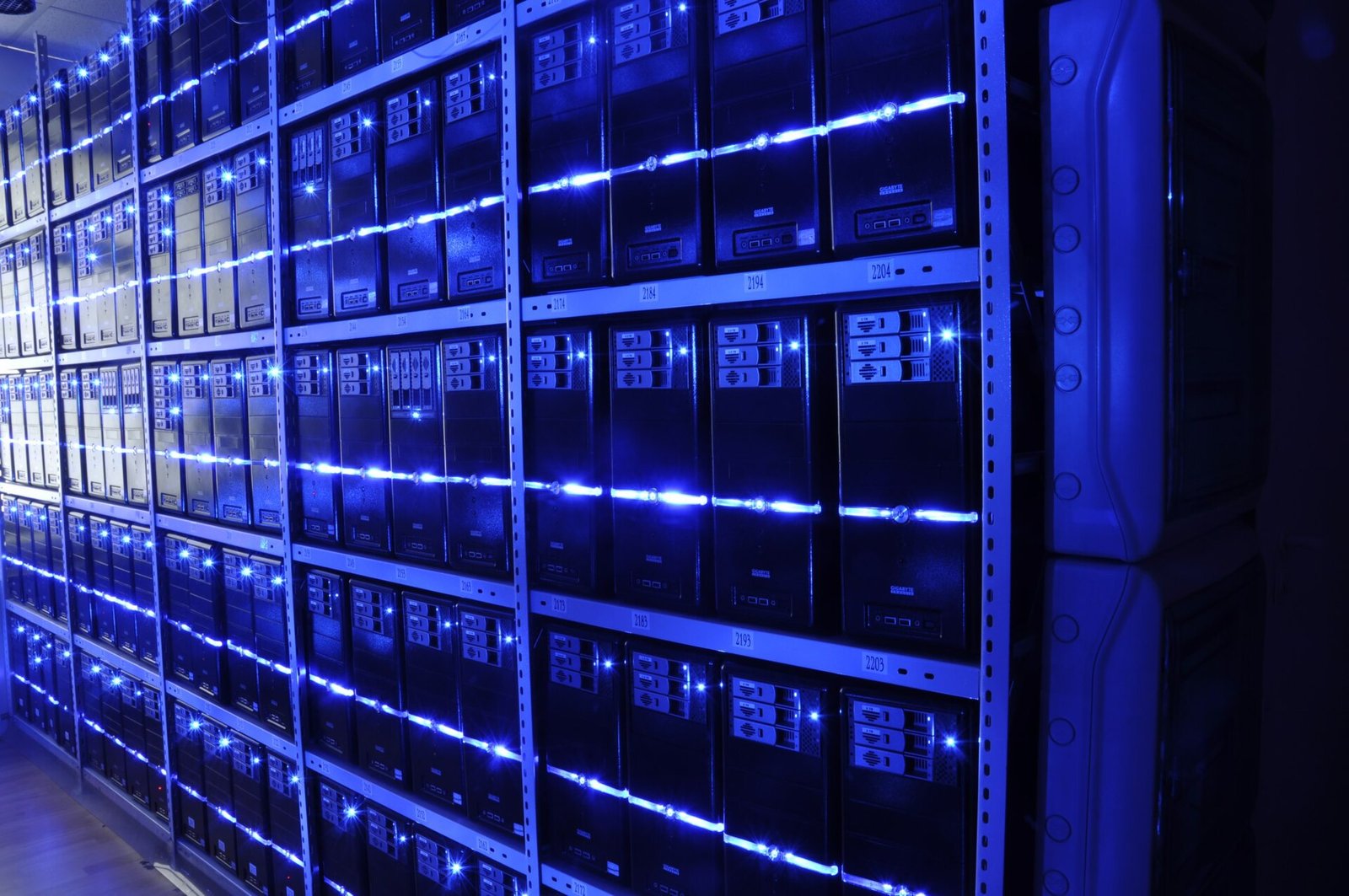
Hundreds of residents in New Brunswick, New Jersey, gathered at city hall on a Wednesday in February 2026.
They weren't there for a festival; they were there to stop a 27,000-square-foot AI data center. And they won, seeing the plans cancelled in favour of a new public park, according to Google Search research notes.
In Vineland, concerns about drinking water spurred protests against a proposed 350-megawatt facility. And in Kenilworth, a 400,000-square-foot data center proposal, already approved, faces a petition signed by over 8,000 people, also reported in research notes.
It seems communities across the state are drawing a line in the sand.
These aren't isolated incidents. Across New Jersey, communities are resisting the sprawling infrastructure demanded by the artificial intelligence boom, even as tech giants like SpaceX AI build massive supercomputing campuses elsewhere, like the 1-gigawatt Colossus in Memphis.
Local resistance highlights a fundamental tension: AI's explosive growth needs immense physical resources, but these needs often clash with community well-being.
That raises three questions.
Question 1
What's Driving the Strong Opposition to AI Data Centers in New Jersey?
The opposition is widespread and deeply felt. A Fairleigh Dickinson University poll released in October 2026 found that nearly two-thirds (65%) of New Jersey voters oppose making it easier to build data centers in the state. Only 25% support easing restrictions.
Crucially, this isn't just about electricity bills. Dan Cassino, a Professor of Government and Politics at Fairleigh Dickinson University, noted that attitudes about big tech companies and AI are driving these views more than rising electricity costs.
For context, a Rutgers-Eagleton Poll from around the same time found that 55% of New Jerseyans believe the costs of data centers, such as high electricity and water consumption, outweigh their economic benefits. The resistance is intensely local: 72% of residents oppose a data center in their own town, 64% in a neighbouring county, and 62% statewide, according to Google Search research notes.
In Vineland, residents like Jenna and Matt Williams worry about the impact on drinking water, as a proposed site is on a Wellhead Protected Area. In Belleville, the town initiated a process in October 2026 to ban AI data centers as permitted land use, citing concerns about noise, energy demands, and industrial footprint.
You see, for many, the benefits of AI feel abstract and distant, while the costs of its infrastructure are concrete and immediate. Imagine a new flyover being planned through your neighbourhood. It promises to ease city-wide traffic, but for you, it means noise, dust, and disrupted local access right outside your home. The benefits are for others, the burden is yours. So, how do these abstract benefits stack up against such tangible local concerns?
Question 2
How Do These AI Data Centers Consume Resources and Impact Local Environments?
And that brings us to the second question. AI data centers are not just large buildings; they are massive energy and water consumers. The proposed 400,000-square-foot AI data center in Kenilworth, for example, is estimated to use as much energy as approximately 200,000 homes, according to Google Search research notes.
For context, AI models like Grok, developed by SpaceX AI, require immense computational power to train. This power comes from thousands, even millions, of Graphics Processing Units (GPUs) packed into these facilities. SpaceX AI plans to equip its Colossus facility with 1 million GPUs by 2026.
These GPUs generate a tremendous amount of heat. To prevent overheating and ensure continuous operation, data centers need constant, intensive cooling systems. This translates into vast electricity consumption and, often, significant water usage for cooling towers or direct liquid cooling.
Think of it like this: your smartphone battery heats up when you use it intensely. Now multiply that by a million, and imagine the cooling challenge. It's like a giant air conditioner running continuously in a small neighbourhood, drawing huge power from the grid and exhausting heat, potentially impacting local utilities and climate. What does this mean for the local power grid and water supply?
SpaceX AI CEO Elon Musk stated the company plans to increase the power capacity of its data centers by 7x to 10 gigawatts by late 2027. A single gigawatt, like the capacity of SpaceX AI's combined Colossus sites by mid-2026, represents a substantial power demand. This scale places significant demands on local grids and water supplies, requiring careful planning and infrastructure upgrades.
Question 3
What Strategies Are Emerging for AI Companies to Integrate into Communities, Beyond Just Building?
The stark contrast between New Jersey's resistance and Memphis's approach offers a glimpse into potential strategies. In Memphis, the City is directing $3.26 million in revenue from SpaceX AI's Colossus 1 data center back into South Memphis neighbourhoods, according to Tom's Hardware.
This revenue is part of the city's Community Benefit Ordinance. The first major allocation of $2 million is going to the Memphis HOPE Initiative, which offers low- and moderate-income homeowners and renters up to $25,000 for qualifying home repairs and improvements.
For context, assistance from the HOPE Initiative is provided as a deferred, interest-free, forgivable loan, forgiven after three years if residency requirements are met. Eligible properties must be within Investment Zone 1, a five-mile radius of xAI's Colossus 1 data center. This creates a direct, tangible benefit for residents living closest to the facility.
This mechanism is like a new toll plaza on a highway. Instead of all the revenue going to a distant state fund, a portion is directly reinvested into local road maintenance or public transport for the villages surrounding the plaza. It creates a direct link between the new infrastructure and immediate community improvement. Can this model truly be a blueprint for AI's future expansion?
This proactive approach of direct economic benefits can help mitigate opposition, shifting the narrative from burden to shared prosperity. It acknowledges the local impact and provides a clear incentive for communities to welcome, or at least tolerate, these large-scale developments.
The Bigger Picture
The tension between AI's boundless ambition and communities' finite resources is a defining challenge of this era. As AI companies scale their operations, they must increasingly engage with local populations not just as sites for construction, but as stakeholders.
The New Brunswick city council's decision to build a park instead of a data center, cheered by residents shouting 'We say a big 'fuck you' to Big Tech!', is a powerful reminder.
The future of AI isn't just about silicon and algorithms; it's about real estate, power grids, and public relations. Finding a welcome home for AI's infrastructure will require more than just technical prowess; it will demand a commitment to shared value and local partnership.
The AI era needs community buy-in, or it risks hitting a wall.
Quick Answers
Why are New Jersey residents opposing AI data centers?
New Jersey residents are opposing AI data centers primarily due to concerns about their impact on drinking water, noise, energy demands, and the industrial footprint. Polls show that attitudes about big tech companies and AI, rather than just electricity prices, are driving this opposition.
How much energy do AI data centers consume?
AI data centers consume massive amounts of energy. For example, a proposed 400,000-square-foot data center in Kenilworth, New Jersey, is estimated to use as much energy as approximately 200,000 homes. SpaceX AI's Colossus sites achieved 1 gigawatt of AI compute capacity by mid-2026, with plans to reach 10 gigawatts by late 2027.
What is a Community Benefit Ordinance for data centers?
A Community Benefit Ordinance (CBO) is a strategy where a portion of a data center's revenue or a fixed sum is directed back into the local community to fund specific needs. In Memphis, a CBO allocates $3.26 million from SpaceX AI's data center revenue to provide up to $25,000 for home repairs for low-income residents near the facility.
Sources
- ABC7 New York18 Nov · 16:33 IST
- Tom's Hardware18 Nov · 15:30 IST
Facts are credited to the outlets above. The analysis, calculations and Signal Check are by the Finnect AI Insights desk.

